Muzzleloader season highlights

Body
The 2024-25 muzzleloader deer season in Oklahoma spanned nine days, from Oct. 26 through Nov. 3. This season appeals to hunters who enjoy the unique challenge of using black powder firearms, and it continues to play a key role in the state’s overall deer management strategy.
Muzzleloader season highlights

What are controlled hunts?

Body
Controlled hunts are offered for deer, elk, antelope, and turkey. They are held in areas where unrestricted public hunting would pose safety concerns or where overharvest might occur.
Photo Credit: Andy Penney/RPS 2019

Hunters take 77 black bears during 2024 seasons

Body
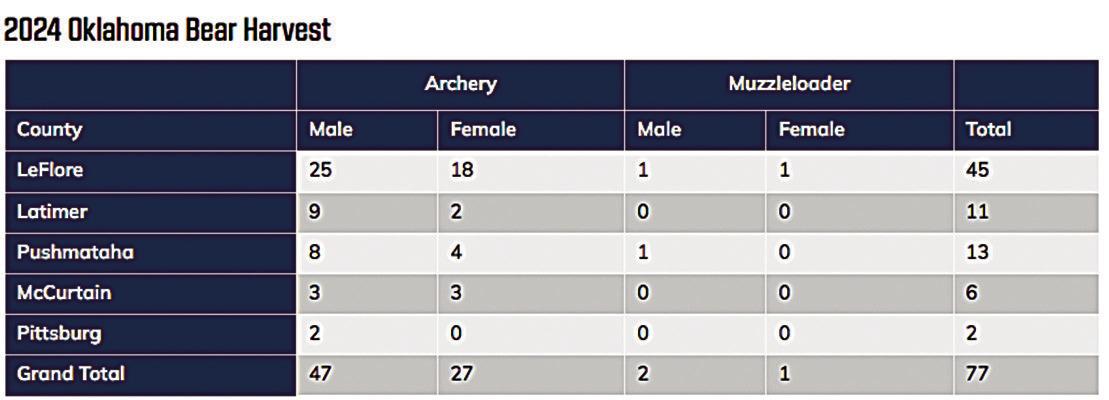
Black bear hunters had a great hunting season in 2024, taking a total of 77 (49 male and 28 female) bears, nine fewer than the year before. Archery hunters took 74 black bears, while muzzleloader hunters bagged three bears in the bear hunting zone that includes all or portions of 12 counties in southeastern Oklahoma.
Hunters take 77 black bears during 2024 seasons

Public check-in requirements

Body
Residents Residents are not required to check in to Wildlife Management Areas, however residents are required to check in to OLAP limited access areas. Nonresidents The Oklahoma Wildlife Conservation Commission adopted new rules in 2025 that require nonresidents accessing certain Oklahoma public hunting and fishing areas to check in and check out of the area.

Chronic Wasting Disease (CWD) update

Body
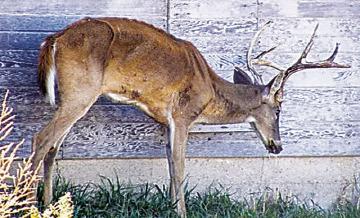
The 2024-25 big game hunting season marked the second consecutive year in which hunters in Oklahoma navigated new challenges following the detection of chronic wasting disease (CWD) within the state’s native wild deer populations. Initially identified in Texas County, and shortly thereafter confirmed in Woodward County, these developments prompted immediate concern among wildlife managers and the hunting community alike, given the serious implications CWD poses for deer health and population sustainability.
Courtesy / Mike Hopper

Public land contribution to deer harvest

Body
Although lands managed by the ODWC — including WMAs and other public properties — make up only about 3% of Oklahoma’s total land area, their contribution to the state’s overall deer harvest is significantly greater than their size might suggest. These public lands serve as vital access points for hunters who may not have private land available, and they are managed with a focus on habitat quality, wildlife conservation, and hunter opportunity.
Public land contribution to deer harvest

Hunters winning the game in a big way

Body
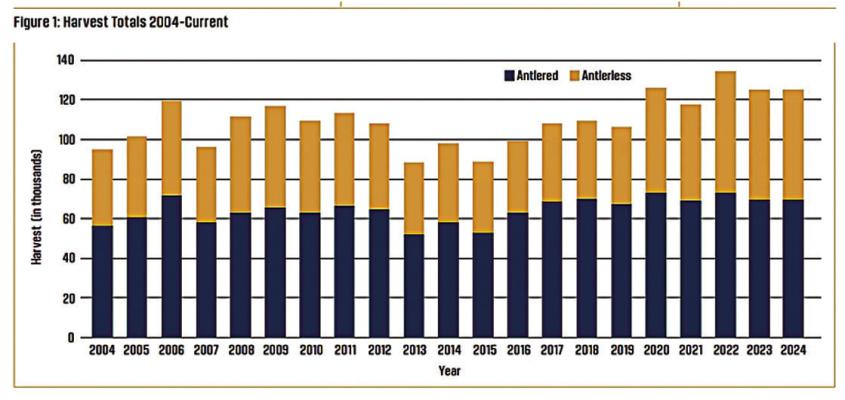
‘Take a Doe’ takes off in state’s second-best season ever The 2024-25 big game hunting season in Oklahoma showcased another year of remarkable success for hunters across the state. Again, favorable environmental and habitat conditions played crucial roles, creating optimal circumstances for wildlife and the people pursuing them.
Hunters winning the game in a big way

Farmers, ranchers bring message to Washington, D.C.

Body
Seventeen members of American Farmers & Ranchers (AFR) Cooperative traveled to Washington, D.C., to represent Oklahoma’s agricultural producers as the state’s grain and cotton farmers struggle with high input costs and low commodity prices. The group joined a nationwide coalition of more than 250 farmers and ranchers as part of the National Farmers Union (NFU) Fall Legislative Fly-In Sept. 8-10.