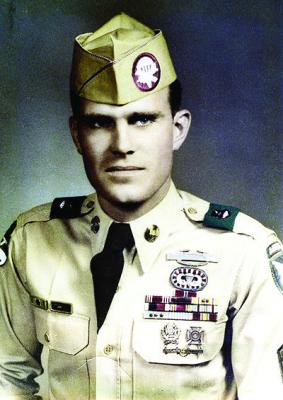
Jimmie Rae Taylor, of Soper, Okla., passed from this life on Sunday, Oct. 26, 2025, at his home in the country surrounded by his family, at the age of 97.
Traci Lea Byrd was born to Barbara and Geary Byrd on April 27, 1972 in Hugo, Okla. She graduated from Hugo High School in 1990 and went on to study business at the Trinity University in San Antonio.
OKLAHOMA CITY – Rep. Justin Humphrey, R-Lane, has once again asked Oklahoma’s attorney general to investigate Steven Harpe, the former director of the Oklahoma Department of Corrections (DOC).
Oklahoma Sen. Markwayne Mullin defends Trump’s strikes on alleged drug boats: ‘Why would we care? They’re terrorists’ At a time when some of his congressional colleagues, including Republicans, are criticizing the administration’s strikes on alleged drug boats in the Caribbean, Sen.
A cloture vote is a procedural vote in the U.S. Senate used to end a filibuster and limit debate. It allows a bill, nomination, or other measure to proceed to a final vote.
The current stalemate in our nation’s Congress (Senate) is a great deal more deadly and disastrous for many American citizens than one might think. What if it was a member of your family that died as a result of political jousting by members of the U.S.
After 30 years as a firefighter, Jason Dobson realized his risk of getting cancer was higher than the general population. So, when he learned of a clinical study to measure the potential effects of smokeand soot-related chemicals, Dobson jumped at the chance.
Choctaw Nation Department of Wildlife Conservation’s (CNDWC) is inviting hunters to participate in the Hunter’s for Food Sovereignty program by donating deer meat via three local deer meat processors.